
Mental Health Europe


The European Year 2013 Cannot Be Developed in a Vacuum - MHE and FEANTSA call for health inequalities to be included in the framework of the Year

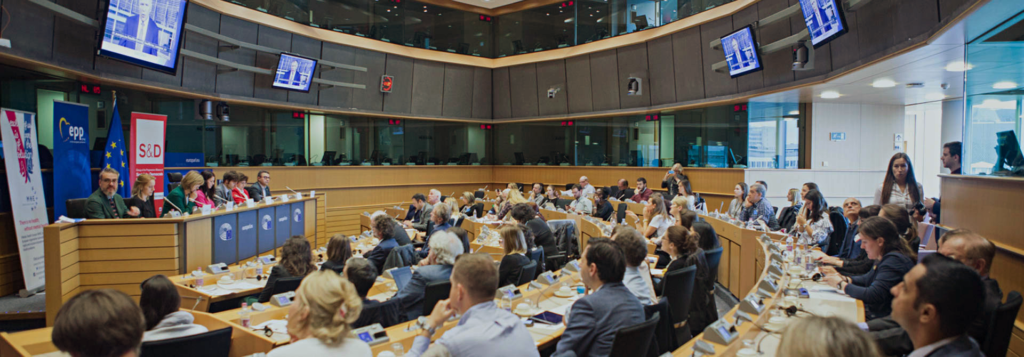
“Inequalities are socially produced, unfair and modifiable,” said Roberto Bertollini, World Health Organization Representative to the European Union, at the joint Mental Health Europe – FEANTSA Hearing, which took place at the European Parliament on November 13.  The event addressed inclusive citizenship from the viewpoint of one of the most excluded groups, homeless people with mental health problems, emphasising that the European Year 2013 cannot be developed in a vacuum. Active citizenship depends on active inclusion, and a fair, democratic society cannot be achieved without the guarantee of a minimum standard of living.

Although still in its early stages, the discourse around the European Year 2013 centres on  free movement. The main issues gravitate towards informing European Union (EU) citizens about their rights, debating the obstacles to fully access them, and promoting a more engaged democratic society. However, the discussion seems to lack one crucial element - acknowledging the deep inequalities still present in all EU Member States. As participation in the society fundamentally begins at local level, no relevant talk of European citizenship or free movement can commence before the issues of inequality and exclusion are addressed. Solidarity, human rights and non-discrimination are at the core of European values, and  cannot be omitted when discussing active citizenship.

Health inequalities particularly impact the lives of the most vulnerable, hindering their participation in society.  While quality healthcare is key to retaining a dignified life, access to it is unevenly spread across the population -  people living in poverty tend to have greater healthcare needs but also more difficulty in accessing care. Nowhere is this more obvious than in the case of homeless people with mental health problems.

In most EU countries, a high proportion of homeless people experience mental health problems compared with the general population, which can be a cause and a consequence of homelessness. At the same time, homeless people have major difficulties in accessing (mental) healthcare services and can even experience exclusion from the very services intended to combat it. Finally, homeless people can find asking for support difficult, at times owing to prior negative experiences with service providers or because of a lack of awareness of their entitlements.

People with mental health problems were found to face discrimination even in health care settings. The World Health Organization found (ex-) users of mental health services to have a lower life expectancy and more chronic health conditions than the general population. People with long term mental health problems were more likely to be obese and have heart disease, high blood pressure, respiratory disease, diabetes, strokes, or breast cancer. They were also more prone to developing chronic health conditions at a younger age, and to dying sooner after diagnosis. Health inequalities mostly stemmed from social deprivation, but also from the lack of health promotion, service access, and equal treatment as well as from fear, mistrust, or prior negative experiences, on both the side of the medical service providers and the service users.

While health inequalities experienced by excluded groups have indeed  been recognised by the European Commission and European Parliament as a major issue, not enough is being done in terms of actual proposals for solutions.  Mental Health Europe (MHE) and FEANTSA believe that a good start would be to create a comprehensive EU Action Plan on Homelessness that includes a wide-ranging mental health perspective and a thorough implementation strategy. Health inequalities should also be recognised and addressed in the framework of the European Year 2013, so as the ensure that the year indeed has an impact on all Europeans.

“With this event, we call for an inclusive European Year 2013, a year that will highlight and aid all those persons who today cannot enjoy their European citizenship, as some of their fundamental needs and rights are not respected or met,” said Maria Nyman, MHE Director.

“The right to health for people experiencing homelessness should be at the heart of the action taken by states to improve the health of their citizens, reduce health inequalities and provide a good standard of healthcare to all citizens without distinction,” added Freek Spinnewijn, FEANTSA Director.

For more information, please contact Suzannah Young, FEANTSA Communications and Information Officer at suzannah.young@feantsa.org or Silvana Enculescu, MHE Communications Manager at silvana.enculescu@mhe-sme.org


Mapping Exclusion

"Tried and Trusted"

Let's socialize!

Search our site

Join MHE

Next events

Give a donation!